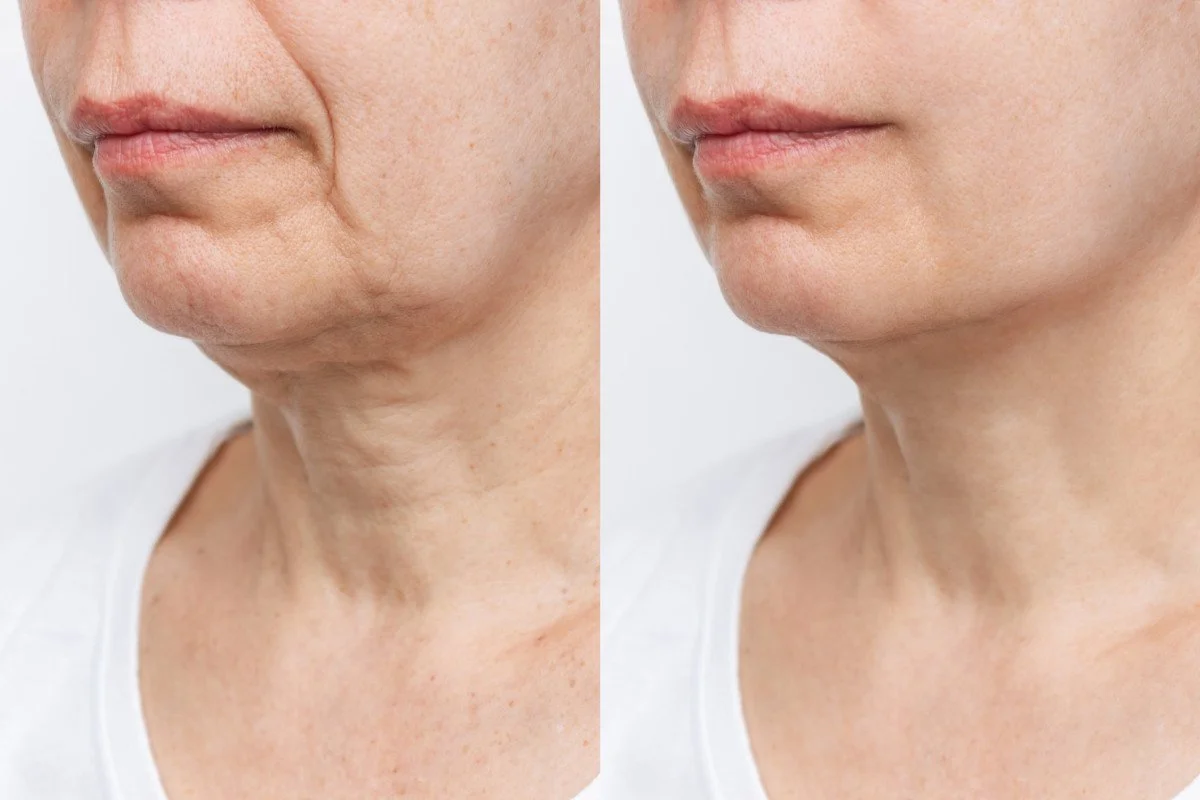
A facelift can address sagging skin, jowls, facial folds, and changes in the neck, but the surgical approach matters. “Facelift” describes several techniques that work with facial tissues in different ways. For patients researching deep plane facelifts vs. traditional facelifts, understanding how these techniques differ is a useful starting point.
Here’s what distinguishes the approaches and how Dr. Joshua DeSerres determines which may be appropriate for each patient.
What “Facelift” Actually Means in 2026
Facelift surgery has evolved considerably. There are several types of facelifts that surgeons may recommend to patients, with technique selected according to the patient's anatomy and pattern of facial aging.
Common concerns include:
Jowls along the jawline
Loose skin around the lower face
Neck laxity
Facial folds
Descent of the cheeks and midface
Traditional (SMAS) Facelift Explained
A traditional facelift commonly involves the SMAS, or superficial musculoaponeurotic system. This layer of connective tissue and muscle sits beneath the skin and contributes to facial support.
Patients in Edmonton may consider an SMAS facelift that can address lower-face laxity, jowling, and certain neck concerns. Depending on the patient's anatomy, the surgeon may tighten or reposition the SMAS before redraping the skin. The specific technique and extent of surgery depend on the individual's facial structure, skin quality, and goals.
Deep Plane Facelift Explained
A deep plane facelift works beneath the more superficial facial tissues by releasing and repositioning deeper structures, including the SMAS-platysma composite. This lets the surgeon mobilize facial tissues as a unit. It can be particularly useful for patients with midface descent, pronounced jowls, or neck laxity.
The deep plane technique has gained ground as surgeons have continued to refine their understanding of facial anatomy and tissue repositioning. For patients in Edmonton who are considering a deep plane facelift, it can provide a way to address several areas of facial aging through deeper tissue repositioning rather than relying primarily on skin tension.
When Each Technique May Fit
There is no single facelift technique that suits every face. Dr. DeSerres considers factors such as:
Location and degree of facial laxity
Midface and cheek descent
Jowling and jawline definition
Neck laxity
Skin quality
Facial proportions
Patient goals and expectations
Recovery varies according to the procedure and individual healing. Bruising and swelling are expected initially, while tissues continue settling over the following months. Results are also influenced by factors such as anatomy, surgical technique, and the natural aging process.
How Dr. DeSerres Selects a Facelift Technique
At Joshua DeSerres Plastic Surgery, the technique is chosen for the patient rather than the patient being matched to a predetermined procedure.
Dr. DeSerres assesses the face as a whole and considers how the cheeks, lower face, jawline, and neck relate to one another. His training includes an Adult Craniofacial Surgery Fellowship at the University of Toronto, with a focus on reconstructive and aesthetic facial surgery. As a high-volume facelift surgeon, he brings this continued education and a detail-oriented approach to surgical planning.
Explore Your Facelift Options with Dr. DeSerres
The choice between a deep plane and traditional facelift should be based on your anatomy, aging pattern, and goals. A consultation at Joshua DeSerres Plastic Surgery is the best way to determine which approach may be appropriate for you.
Explore Dr. DeSerres' facial surgery options or learn about the deep plane facelift procedure, then contact us to discuss your goals.