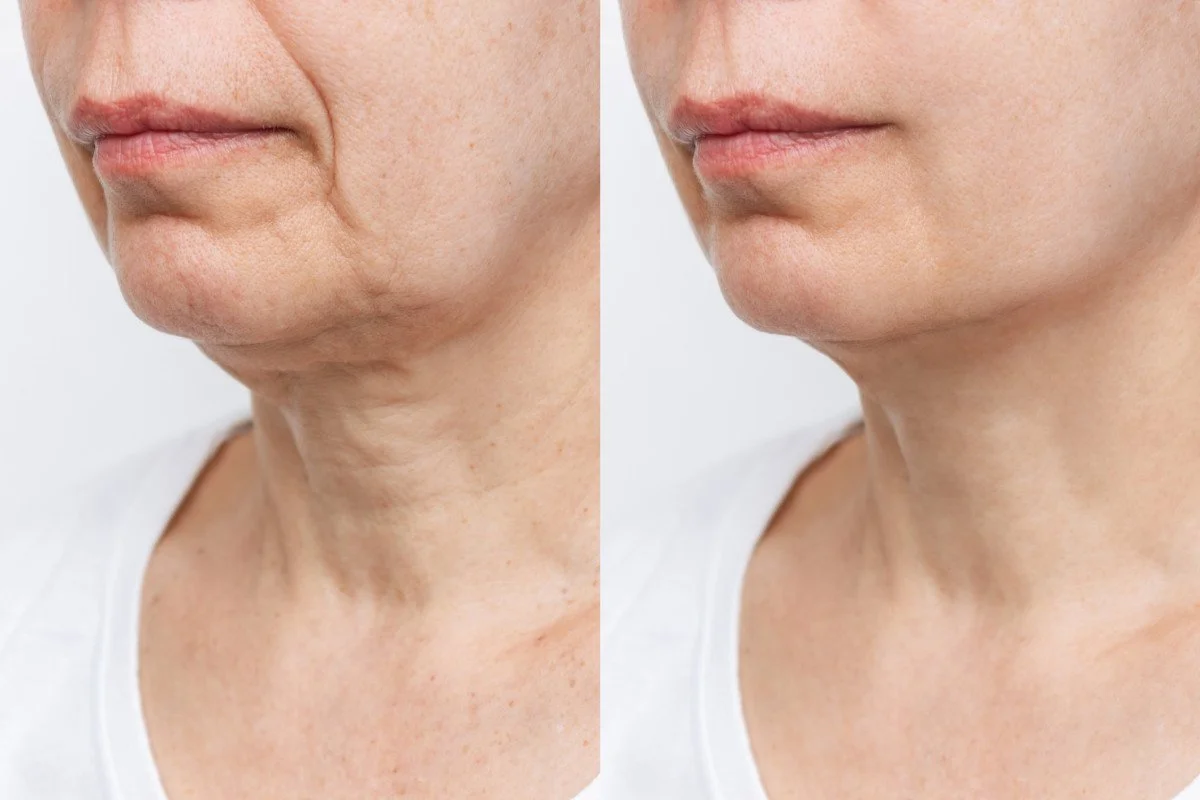
A deep plane facelift in Edmonton is a surgical facial rejuvenation procedure that lifts and repositions the deeper SMAS-platysma composite layer of the face, addressing midface descent, jowl formation, nasolabial folds, and jawline definition. At DeSerres Plastic Surgery, your candidacy, technique selection, and combination procedure plan are decided together with Dr. DeSerres in consultation.
Understanding what happens before, during, and after surgery can help you feel prepared. Here is what to expect from a deep plane facelift.
Procedure Overview
A deep plane facelift works with the deeper facial tissues beneath the skin. The technique releases and repositions the deeper SMAS-platysma composite layer to address changes associated with facial aging.
It can improve:
Midface descent
Jowl formation
Nasolabial folds
Jawline definition
Facial and neck laxity
The technique differs from a traditional SMAS facelift in how deeper tissues are released and repositioned. Your anatomy and goals determine which approach is most appropriate.
Candidacy Requirements
Typical candidates are generally:
Healthy and at a stable weight
Non-smokers or willing to stop nicotine before surgery
Concerned about facial laxity or tissue descent
Realistic about surgical results
Certain health conditions, nicotine use, or unrealistic expectations may affect candidacy. Dr. DeSerres will assess these factors during your consultation.
What to Expect on Surgery Day
Deep plane facelift surgery is generally performed under general anesthesia in an accredited hospital or surgical setting. Dr. DeSerres operates at facilities including Royal Alexandra Hospital, Grey Nuns Hospital, and Meadowlark Surgical Centre.
Surgery time varies depending on your treatment plan and whether additional procedures are performed. Your expected surgical time and specific plan will be discussed during consultation.
Recovery Timeline
First week: Rest, follow postoperative instructions, and expect swelling, bruising, and tightness.
Weeks 2–3: Visible swelling and bruising typically improve. Many patients can return to non-physical work around this time.
Around 6 weeks: Most patients can gradually resume their usual activities, based on their recovery.
Several months: Residual swelling continues to settle as your final results develop.
Combining Other Procedures with Your Facelift
Depending on your goals, a deep plane facelift may be combined with:
Brow lift
Blepharoplasty
Lip lift
Facial fat grafting
Why Choose Dr. Joshua DeSerres for a Deep Plane Facelift
Dr. Joshua DeSerres, MD, FRCSC, completed his plastic surgery training at the University of Alberta and Adult Craniofacial Fellowship training at the University of Toronto.
He is a high-volume facelift surgeon who continues to refine his deep plane technique through conferences and by working alongside some of the world’s leading deep plane facelift surgeons.
Book a Consultation with Dr. DeSerres Today
If you are considering a deep plane facelift in Edmonton, a consultation is the first step. Dr. DeSerres can assess your facial anatomy, discuss your goals, and determine whether a deep plane facelift or another approach is right for you. Book today.
Frequently Asked Questions
How long do deep plane facelift results last?
Results can last for many years, although longevity varies based on factors such as age, skin quality, and lifestyle.
Will I look “pulled” or unnatural?
The deep plane technique repositions deeper facial tissues rather than simply pulling the skin, supporting natural-looking results.
What is the difference between a deep plane facelift and a mini facelift?
A mini facelift typically focuses on the lower face, while a deep plane facelift addresses deeper tissues and more extensive facial aging.